


A roof scupper is a drainage feature commonly installed on commercial flat or low-slope roofs to direct rainwater off the roof and away from the building. For businesses across Minnesota, scuppers play an essential role in managing heavy rain and melting snow efficiently, helping prevent ponding, leaks, and structural damage.
In this guide, you’ll learn:
- What roof scuppers are: How they function and where they’re installed.
- Scuppers vs. roof drains: Key differences in design, cost, and maintenance.
- Best applications: When scuppers make more sense than internal drains.

What Is a Roof Scupper?
A roof scupper is an opening built into the perimeter wall or parapet of a roof that allows rainwater to exit. The water flows through the scupper and is either directed into a downspout, collector box, or away from the building’s walls and foundation.
Where Scuppers Are Installed
- Parapet walls: The most common installation spot, especially in commercial construction.
- Edge scuppers: Placed in the roof fascia or edge flashing on open roof edges.
- Overflow scuppers: Secondary outlets installed slightly higher than the main drain to prevent flooding during heavy rainfall.
Scuppers rely on proper slope design so water flows naturally toward these openings, keeping your flat roof clear and protected.
Benefits of Roof Scuppers
Cost-Effective Drainage
- Lower installation cost: No interior plumbing or complex piping required.
- Simple construction: Fewer parts and faster installation save time and labor.
- Budget-friendly option: Especially practical for large commercial roofs where multiple drains are needed.
Minimal Maintenance
- Easy access: Visible from the building exterior for quick inspection.
- Reduced freeze risk: Exterior positioning prevents water from freezing inside pipes during Minnesota winters.
- Simplified upkeep: Cleaning debris and checking for cracks are typically all that’s needed.
Adaptable Design
- Architectural flexibility: Can be designed to match the style of modern or traditional buildings.
- Downspout pairing: Works seamlessly with downspouts or rain chains for controlled runoff.
- Emergency overflow: Acts as a secondary safety feature if primary drains become clogged.
How Roof Drains Differ from Scuppers
While both systems serve the same purpose—removing water from a flat roof—they do it in very different ways.

Interior Roof Drains
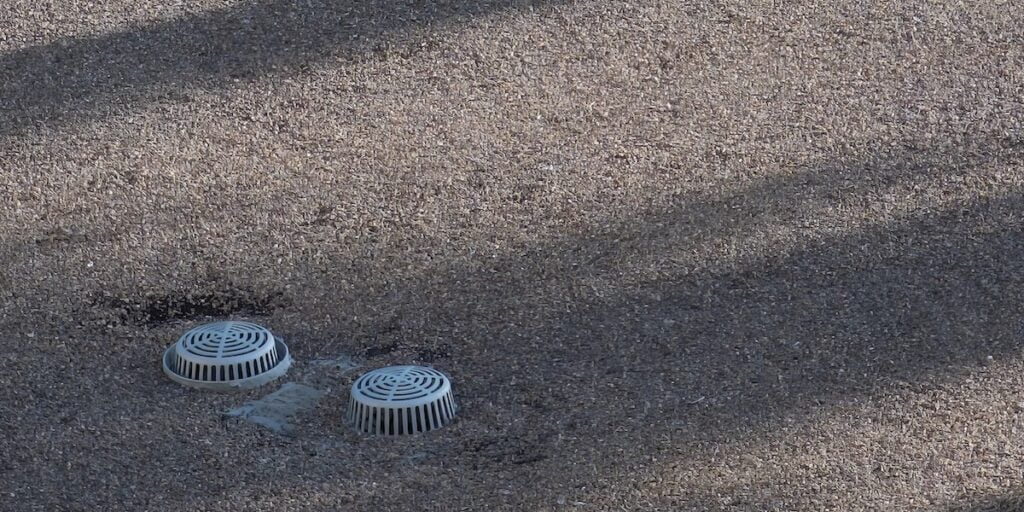
Interior drains sit at low points on the roof surface and connect to pipes that carry water through the building and into underground drainage systems.
- Hidden design: The piping is concealed for a clean appearance.
- More complex installation: Requires careful roof slope design and expert installation.
- Higher cost: Materials and labor costs are generally higher than with scuppers.
Key Differences Between Scuppers and Drains
| Feature | Roof Scuppers | Interior Roof Drains |
| Location | Roof edges or parapet walls | Low points on roof surface |
| Drainage Path | External | Internal piping |
| Installation Cost | Lower | Higher |
| Maintenance Access | Easy and visible | Requires internal inspection |
| Aesthetic Impact | Visible from exterior | Hidden within building |
| Freezing Risk | Low with proper design | High without insulated piping |
5 Factors to Consider: Scuppers vs Drains
- Building Size and Roof Area: Large commercial roofs often benefit from using both systems for complete drainage coverage.
- Local Climate: In freezing climates like Minnesota, scuppers with collector heads and heat cables can outperform internal drains that risk freezing.
- Budget: Scuppers offer lower upfront costs and easier long-term maintenance.
- Building Style: Internal drains preserve a clean exterior look, while scuppers can complement modern or industrial architecture.
- Code Requirements: Many building codes require overflow scuppers even when primary internal drains are installed.
Common Scupper Configurations
Basic Wall Scuppers
Openings cut through parapet walls that direct water away from the structure.
- Best for: Small and mid-sized roofs.
- Maintenance tip: Remove debris regularly to prevent pooling.
Scuppers with Downspouts
Connected directly to vertical downspouts for controlled water flow.
- Best for: Directing runoff away from sidewalks, entrances, and landscaping.
- Maintenance tip: Inspect for cracks or clogs at transition points.
Collector Heads (Conductor Boxes)
Attached to scuppers and downspouts to regulate flow and handle overflow during heavy rain.
- Best for: Large roof sections or areas with high rainfall volume.
- Maintenance tip: Ensure proper sealing and slope alignment to prevent leaks.

When Should You Use Roof Scuppers?
- Retrofit Projects: Ideal for older buildings lacking internal drainage.
- Budget-Conscious Maintenance: Offers simple installation without major structural work.
- Code-Required Overflow Protection: Many Minnesota codes require scuppers as emergency outlets.
- High-Visibility Roofs: Perfect for buildings where modern design or visible drainage components complement the architecture.
Roof Scupper Installation in Maple Grove and Surrounding Areas
For businesses in Maple Grove and surrounding areas, roof scuppers are one of the best drainage options for flat and low-slope roofs. Minnesota’s freeze-thaw cycles demand durable, well-designed systems that prevent ponding and ice buildup. Northface Construction specializes in custom scupper installation, ensuring proper slope, sealing, and compliance with all local codes. Our team can also integrate scuppers with downspouts or collector boxes for complete water control.
FAQs for Minnesota Building Owners
How many scuppers does a flat roof need?
That depends on the roof size, slope, and expected rainfall. Most commercial buildings require one scupper per 100 to 200 square feet of roof area, though local codes may differ.
Do scuppers freeze in winter?
With proper slope and installation, scuppers rarely freeze. In Minnesota, adding heat tape or collector boxes helps ensure year-round functionality.
Which is better for Minnesota buildings—scuppers or drains?
Many commercial roofs use both. Scuppers handle overflow and freeze protection, while internal drains manage steady runoff efficiently.
How much do roof scuppers cost?
Expect to pay $300–$800 per scupper installed, depending on materials and roof size. Collector boxes and downspout systems add roughly $500–$1,000 per section.
Can Northface Construction install scuppers on existing roofs?
Yes. Our team regularly retrofits scupper systems on existing commercial and multifamily properties throughout Minnesota, ensuring code compliance and reliable drainage.

Trust Northface Construction for Expert Flat Roof Drainage
Whether you’re planning a new flat roof or upgrading your building’s drainage system, understanding the function of roof scuppers is essential for long-term performance. Northface Construction provides commercial roofing and drainage solutions built to withstand Minnesota’s toughest weather. From new scupper installations to maintenance and repairs, our team ensures your system performs efficiently, meets code, and protects your property year-round.
Contact Northface Construction today to schedule your flat roof drainage consultation and keep your building protected from water damage.
